
There is a quality of light in La Palma that exists nowhere else. A light that astronomers have been studying for decades from the Roque de los Muchachos, at 2,426 metres above the Atlantic, because the night sky here is one of the clearest on the planet. That same clarity — of the air, the colours, the silence — is equally apparent during the day, when the green of the pine forests contrasts with the black of the volcanic basalt and the blue of the ocean appears in the distance at every bend in the road.
La Palma is the most north-westerly of the Canary Islands and, for those who know what they are looking for, the most intense. A UNESCO Biosphere Reserve, it is home to the oldest nature park in the Canary Islands (La Caldera de Taburiente, established in 1954), volcanoes that have been shaping the landscape for centuries — the most recent, Tajogaite, erupted in September 2021 and produced more than 85 days of lava flows — and a network of trails crossing radically different ecosystems within just a few kilometres.
Choosing a rural holiday home in La Palma means choosing that kind of trip: one that starts with a coffee on the terrace as dawn turns the peaks of the Cumbre orange, and ends watching the stars with the naked eye because there is no light pollution here to prevent it. There are no organised entertainment programmes or all-inclusive resorts. There is a real island, and a house that is entirely yours for the duration of your stay.
This guide gives you everything you need to choose where to stay, what to do, and when to visit.
Table of Contents
- Why choose a rural holiday home in La Palma
- Areas: where to find the most characterful accommodation
- What to look for: private pool, character, views
- Things to do in La Palma from your rural retreat
- Best time to visit La Palma
- Getting to La Palma
- How to book your holiday home in La Palma
- Frequently asked questions
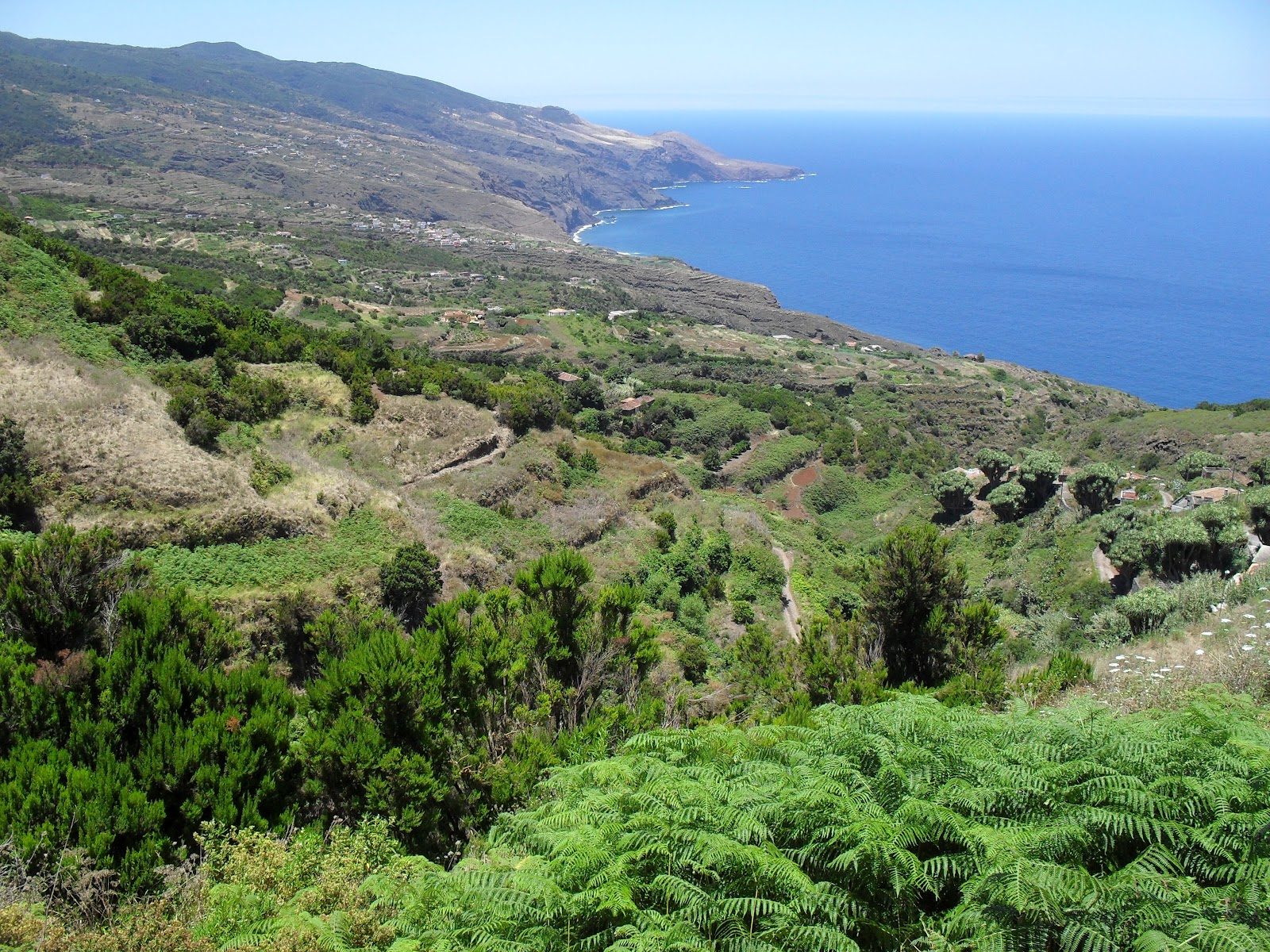
Why Choose a Rural Holiday Home in La Palma
La Palma does not have the mass tourism of southern Gran Canaria or the large hotel complexes of Tenerife. That is precisely its advantage. Travellers who come to the island do so with the intention of actually experiencing it, not ignoring it from a heated pool.
Holiday rentals in La Palma in the form of rural houses or villas are a perfect match for this kind of traveller. Not because hotels don’t exist — they do, and good ones — but because the structure of the island, with its valleys, its mid-altitude zones and its forested areas, makes a house with its own terrace the most natural way to live here.
The landscape begins on your own terrace. In La Palma, the landscape argument for a property is not “has sea views” in a generic sense. It is: “from here you can watch the Valle de Aridane opening towards the Atlantic” or “at seven in the morning, when the mist comes down through the laurel forest, the courtyard smells of damp earth and wild thyme.” The surroundings are part of the experience in a way that standard hotels simply cannot offer.
Complete privacy for your group. A vacation rental in La Palma is a space of your own: many of our houses have their own private pool and grounds, and where the pool is shared, it is only with the other houses of the same estate. No breakfast schedule, no set timetables. The island has a quiet energy that is best enjoyed when you set your own pace.
Local food as part of the journey. La Palma’s markets — the one in Los Llanos de Aridane, the one in Santa Cruz de La Palma — offer products you won’t find in mainland supermarkets: queso palmero (PDO, smoked with prickly pear and almond skin), mojo palmero, miel de caña (local sugarcane syrup), potatoes with their own names in varieties not seen elsewhere, and wines from the La Palma DO grown in volcanic soil. Cooking in the house is not a substitute for restaurants; it adds a layer of experience that a hotel buffet cannot provide.
Genuine sustainability. La Palma is a Biosphere Reserve. Staying in rural houses that are integrated into the land — not purpose-built tourist constructions detached from the environment — is a coherent way to visit an island that has made a conscious choice to pursue lower-impact, higher-value tourism.
Areas: Where to Find the Most Characterful Accommodation
La Palma covers 708 km² and has an orography that creates completely different microclimates and landscapes within a few kilometres. Not all areas have the same character or the same accommodation offer. Here are the ones that concentrate the best options.
Los Llanos de Aridane and the Valle de Aridane
The Valle de Aridane is the economic heart of La Palma: the largest, greenest and most accessible area from the airport. Los Llanos de Aridane is the main town in the western valley — about 35–40 minutes from the airport, crossing the island through the Cumbre tunnel — and from here, access to the routes of the south (Fuencaliente, the Cumbre Vieja volcanoes) and north (Caldera de Taburiente National Park) is at very manageable distances.
The rural houses in the valley tend to be set within estates of banana, avocado and vine cultivation. The valley climate is the most benign on the island: warm and sheltered by the Cumbre, with less rainfall than the north and more sunshine than the mid-altitude zones. For families or those wanting to combine relaxation with day trips to different parts of the island, the Valle de Aridane is the most practical base.
El Paso and the Mid-Altitude Zone
The municipality of El Paso sits in the mid-altitude central zone of the island, between the Valle de Aridane to the west and La Caldera de Taburiente to the north. It is the natural gateway to the National Park: the Park Visitor Centre is on the outskirts of El Paso, and the main access routes to the Caldera trails begin less than 15 minutes away by car.
The El Paso mid-altitude zone has well-preserved rural architecture: stone houses with laurel and strawberry tree patios, kitchen gardens growing colourful potatoes and onions, and views down across the valley to the Atlantic. For hikers or those wanting to be close to the National Park, this is the best base.
Fuencaliente and the Southern Volcanoes
Fuencaliente is at the southern tip of the island, in the most geologically active zone of La Palma. This is where two of the island’s historic volcanoes stand: San Antonio (1677) and Teneguía (1971), whose solidified lava flows reach the sea and have created a new shoreline of black rock. The most recent eruption, Tajogaite (2021), took place further north along the Cumbre Vieja ridge, in the municipality of El Paso.
Holiday villas with private pool in La Palma in the Fuencaliente area take advantage of the southward orientation of the terrain, with more sunshine hours than the rest of the island. The Fuencaliente wineries — some of the finest in the La Palma DO — are literally next door. For those whose programme includes volcanic landscapes and wine, the south of the island has an identity all of its own.
Puntagorda and the Northwest
Puntagorda is in the northwest of the island, in a mid-altitude zone of laurel forest and pine woodland that contrasts with the drier landscape of the south. The municipality is small and quiet, with a limited but carefully curated accommodation offer: wood and stone houses set within a green landscape that recalls the Atlantic scenery of northern Europe, but with Canarian temperatures.
The northwest of La Palma has the island’s least-visited hiking routes, making it attractive for those in search of genuine silence and crowd-free paths. The Roque de los Muchachos observatory is about 45 minutes by car; the beaches of the northwest (some of black volcanic sand, some of pebbles) are the least frequented on the island.
Garafía and the Northern Tip
Garafía is the northernmost municipality of La Palma and one of the most remote in the Canary Islands. Population density is low, villages are small and the landscape is a succession of ravines and laurel forests with almost no development. La Palma’s Biosphere Reserve encompasses much of Garafía’s territory.
Staying in Garafía means choosing maximum isolation: houses with views over the north Atlantic, unpaved tracks, nights with skies that have no parallel anywhere in mainland Spain. It is not the most comfortable or accessible area, but for those seeking true disconnection, Garafía is their destination.
Barlovento and the Northern Coast
Barlovento is on the northern coast of the island, in the greenest and wettest zone of La Palma. The municipality gives its name to one of the few natural rock pools on the island: the La Fajana pool, a seawater lagoon among volcanic rocks with public access. The north of La Palma receives trade winds that keep the air cool and moist, with a vegetation of mosses and ferns not found elsewhere in the Canary Islands.
For those who value greenery over guaranteed sunshine, the north of the island has the highest concentration of original forest in La Palma. Accommodation in Barlovento is scarce, but what exists offers a setting with no equivalent in the rest of the archipelago.
What to Look for in Your La Palma Accommodation
The rural accommodation offer in La Palma is more limited in number than on Gran Canaria, but what exists has a level of authenticity and personality that few islands can match.
Villa with Private Pool
A villa in La Palma with private pool is the most sought-after option and, on La Palma, the hardest to find. The island’s topography — steep slopes, terraced terrain — means that private pools in rural properties are less common than on more tourism-developed islands.
Those that do exist are typically built to take advantage of the natural terraces of the land, with views over the valley or Atlantic that more than make up for the smaller number of choices. If a private pool is a firm requirement, booking well in advance is essential — especially in summer and Easter — because supply is limited and demand is growing. For a detailed rundown of the options, see our guide to rural cottages with pool in La Palma.
Charming Rural House with Traditional Palmero Architecture
La Palma’s traditional architecture has characteristics that distinguish it even from the rest of the archipelago: houses with green-lacquered wooden balconies, inner courtyards with aromatic plants and fruit trees, tea pine (Canarian pine) ceilings with exposed beams, and volcanic stone walls in shades from grey to black through ochre.
A charming rural house in La Palma preserves those original characteristics. Details to look for: wooden latticework on windows, clay or cobblestone floors in the courtyards, whitewashed walls contrasting with the vegetation, kitchens with colonial Canarian tiles. These are houses with their own history, and they feel different from the very first moment.
Estate with Kitchen Garden and Well-Equipped Kitchen
In La Palma, many rural houses form part of working estates: avocados, bananas, potatoes, vines, fig trees. Staying in one of these properties means having access to fruit and vegetables grown on site — an advantage that goes beyond tourism and connects with the way the island has sustained itself for centuries.
A well-equipped kitchen is not a minor detail in La Palma, where the local markets justify a couple of mornings spent shopping and cooking. Look for gas hobs, a functional oven, a large fridge and enough kitchenware for the size of your group.
Things to Do in La Palma from Your Rural Retreat
La Palma concentrates within 700 km² a variety of experiences that islands three times its size cannot offer. The usual problem is not that there isn’t enough to do; it’s that there’s too much for a single week. For a full practical guide, see things to do in La Palma.
Hiking in La Palma
La Palma has more than 1,000 km of waymarked trails — the highest density of hiking routes per square kilometre in the Canary Islands. Levels range from easy walks through ravines and along coastlines to high-mountain traverses requiring specific equipment.
La Caldera de Taburiente: the National Park contains one of the largest erosion calderas in the world, around 8 km across and its own network of waymarked trails. The classic traverse down through the Caldera (PR LP 13) requires advance booking if you want to camp at the park’s campsite, but there are day-access routes into the crater’s interior from the Mirador de La Cumbrecita. From there, the view over the ravines and waterfalls inside the park is one of the most impressive natural spectacles in the Canary Islands. Moderate to demanding level.
Ruta de los Volcanes (GR 131 south): the most emblematic trail in southern La Palma follows the Cumbre Vieja ridge from north to south, passing the craters of historic eruptions. From the Refugio de El Pilar (El Paso) to Los Canarios (Fuencaliente) is around 17–19 km one way — around 24 km if extended to the Fuencaliente lighthouse — and is usually walked in a full day; sections now include the Tajogaite (2021) lava flows, adding a landscape of very recently solidified lava to the route. Moderate level.
Los Tilos Forest (Integral Nature Reserve): in the north of the island, the laurel forest of Los Tilos is a UNESCO Biosphere Reserve — the original core of La Palma’s reserve, declared in 1983. The trails through the forest’s interior are short but of extraordinary botanical density: mosses, giant ferns, century-old laurels. A completely different atmosphere from the volcanic zones of the south.
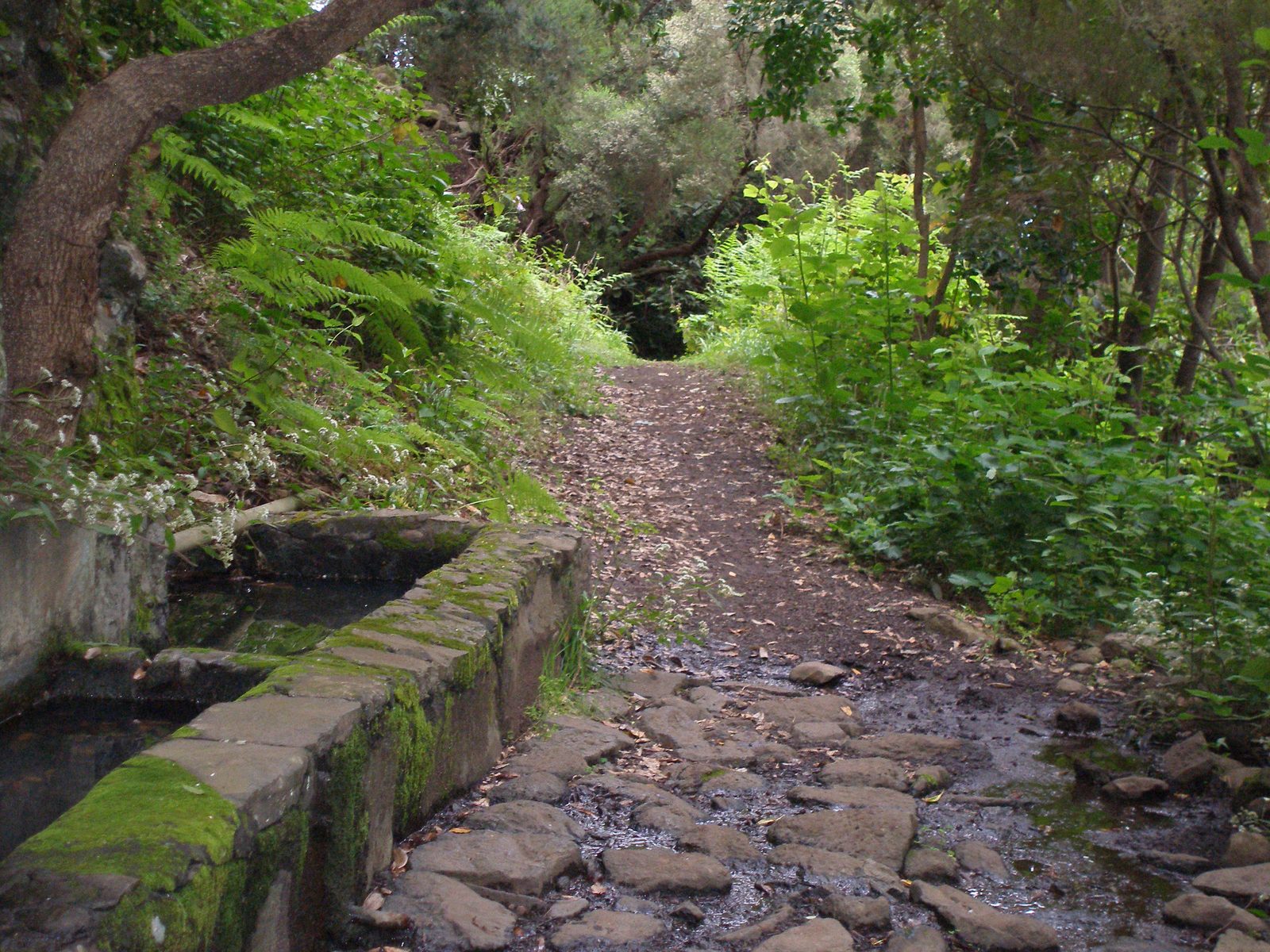
Ruta del Agua: La Palma’s historic irrigation channels (acequias) are part of the hydraulic engineering that enabled the island’s agricultural development. Some of these waterways have hiking routes that follow them for kilometres through pine forests and farmland.
Volcanoes and Geology
La Palma is one of the most volcanically active places on the planet. The most recent eruption, the Tajogaite volcano in the Las Manchas area (La Laguna), lasted from 19 September to 13 December 2021: 85 days of lava flows that destroyed around 3,000 buildings and created 59 hectares of new land above the sea.
La Caldera de Taburiente National Park has a geological interpretation trail that explains how a volcanic collapse 560,000 years ago created one of the largest erosion calderas in the world (1.5 km deep, around 8 km in diameter). The Park Visitor Centre in El Paso is the best introduction before entering the interior.
In Fuencaliente, the Parque Natural de los Volcanes allows you to walk literally over lava flows from 1971 and 1677, with the Teneguía and San Antonio craters accessible on foot. Walking on land that is less than 60 years old and watching the first mosses colonise the black rock is an experience difficult to put into words.
Astronomy: Europe’s Darkest Skies
The Roque de los Muchachos Observatory (ORM), at 2,426 metres above sea level on the summit of La Palma, houses some of the world’s most advanced telescopes, including the Gran Telescopio Canarias (GTC), the largest optical telescope on the planet. The reason is the sky: La Palma has the lowest light pollution of any inhabited island in Europe and an exceptionally stable atmosphere.
The island was certified as the world’s first Starlight Reserve in 2012, backed by the pioneering 1988 Sky Law, meaning there are specific lighting regulations in place to protect night sky quality. The result is that from any rural holiday home in La Palma, on a clear night without a full moon, the Milky Way is perfectly visible to the naked eye with a clarity that no longer exists in continental Europe.
There are guided night visits to the observatory (advance booking required), and for those wanting to take the experience further, astrotourism companies offer stargazing sessions with telescopes at several viewpoints across the island.
Beaches in La Palma
La Palma does not have Caribbean-style white sand beaches. What it has are beaches of black volcanic sand and pebbles, natural rock pools, and an Atlantic coastline free from overcrowding. For those who come looking for exactly that, they are extraordinary beaches.
Puerto Naos: La Palma’s longest beach (black volcanic sand, 600 metres), in the Valle de Aridane. It was evacuated during the 2021 eruption due to volcanic gases and its reopening has been gradual. We recommend checking current access status before planning a visit.
Charco Verde: a sheltered black-sand cove with calm waters, near Los Llanos de Aridane. Very popular with families with young children. Like Puerto Naos, it sat within the zone affected after the 2021 eruption, so check the current access status before planning a visit.
La Fajana (Barlovento): natural rock pool on the northern coast, among volcanic rocks. The water is cooler than in the south, but the setting is spectacular and overcrowding is minimal.
Tazacorte: the village has an active fishing harbour and a black sand beach with fish restaurants directly on the waterfront. One of the most relaxed lunches on the island, with no need for advance booking or planning.
Palmero Gastronomy
La Palma has its own culinary identity that deserves attention. Queso palmero (PDO) is one of the most recognised cheeses in the Canary Islands: fresh, semi-cured or cured, smoked over prickly pear or almond skin, with a flavour of free-range goat’s milk. Some of the island’s cheese producers offer visits by appointment.
La Palma DO wines have a history spanning several centuries: Malvasía de La Palma was one of the most prized wines in Europe in the sixteenth and seventeenth centuries (Shakespeare mentions it in his plays). Today the wineries of the south — especially in Fuencaliente and its surroundings — produce whites, rosés and reds of great character from grapes including Negramoll, Listán Negro and Albillo Criollo.
La Palma’s ron miel is another locally produced spirit with its own designation: white sugarcane rum blended with honey, with a flavour entirely different from Caribbean rum. The Ron Aldea distillery in San Andrés y Sauces has been making rum from sugarcane juice since 1936.
Culture and History
Santa Cruz de La Palma is the island’s capital and one of the best-preserved historic centres in the Canary Islands. The old town has Renaissance palaces, the Iglesia Matriz de El Salvador and the famous colourful houses with wooden balconies over the sea on the Avenida Marítima. For sixteenth-century Canarian architecture in its most authentic state, Santa Cruz de La Palma is unrivalled in the archipelago.
Los Indianos de Santa Cruz de La Palma: the capital’s carnival is famous for the Indianos parade, in which participants dress in white and throw talcum powder into the air, referencing the Canarian emigrants who returned from Cuba having made their fortunes. It is one of the most original carnivals in the archipelago and falls in February–March.
Museo Insular de La Palma: housed in the former Franciscan convent of San Francisco in Santa Cruz, with collections spanning fine arts, ethnography and natural history.
Best Time to Visit La Palma
La Palma has a more variable climate than Gran Canaria or Fuerteventura. The island receives more rainfall, particularly in the north and at altitude, and microclimates vary considerably by zone and elevation. Honesty is important here.
January and February: the Palmero winter is mild in the valleys (14–20°C by day) and cool at altitude. The north and mid-altitude zones have a higher chance of mist and rain. The Santa Cruz carnival (Los Indianos) usually falls in these weeks and is worth timing your visit around if possible.
March and April: spring arrives gradually. Almond and fruit trees in the mid-altitude zones come into blossom. Rainfall decreases, days lengthen and temperatures are pleasant across the island. A good period for hiking and for visiting the north without summer heat.
May and June: good months for those wanting to combine hiking with clear skies. The southern and western valleys already have consistent sunshine. Tourism is moderate and accommodation availability is good.
July and August: peak season. The Valle de Aridane and southern areas have constant sunshine and summer temperatures (26–30°C). The summit zones are cooler. Accommodation demand is high, especially for villas with private pools, and booking 3–4 months ahead is necessary to secure the best options.
September and October: the best overall combination for most travellers. Atlantic water temperatures are at their warmest, tourism drops after August, prices are more accessible and the weather is settled. For hiking, astronomy and gastronomy (grape harvest at the Fuencaliente wineries), September and October are benchmark months.
November and December: the north returns to overcast days. The south and valleys maintain a pleasant temperature. Palmero Christmas traditions have their own character. Christmas and New Year demand rises and availability at the best properties decreases.
On the climate (honestly): La Palma is not an island of guaranteed sunshine. The north and mid-altitude zones can have completely overcast days even in summer. What it does have is extraordinary greenery, an air quality that few islands can offer, and a landscape that changes with the light and weather in ways that perfectly sunny days do not allow. If guaranteed daily sunshine is the primary requirement, the south of Gran Canaria or Fuerteventura are more predictable options.
Getting to La Palma
La Palma has its own airport: Aeropuerto de La Palma (SPC), located on the eastern coast of the island in the municipality of Mazo, about 15 km south of Santa Cruz de La Palma.
From the UK and Ireland: direct charter and scheduled flights to SPC operate seasonally, mainly in summer. Outside peak season, the most common option is to fly via Madrid, Las Palmas de Gran Canaria or Tenerife Norte and connect to La Palma.
From Germany, the Netherlands, Switzerland and Austria: direct flights exist but are mainly seasonal charter services and summer routes. Outside these periods, connections via Madrid, Las Palmas or Tenerife Norte are the standard approach.
Via Gran Canaria or Tenerife: Binter Canarias operates frequent inter-island flights from Las Palmas (LPA) and Tenerife Norte (TFN) to La Palma (SPC). For European travellers, flying into Las Palmas or Tenerife and taking an inter-island connection is sometimes more cost-effective than finding a direct flight to SPC.
By ferry: Fred Olsen and Naviera Armas operate connections between La Palma and the other islands. The ferry from Tenerife (Los Cristianos) takes around 2.5–3 hours with Fred. Olsen’s fast ferry and around 3 hours 15 minutes with Naviera Armas. An interesting option for those wanting to combine La Palma with another island in a single trip.
Getting around the island: a hire car is essential. The island has well-maintained roads, though with pronounced bends in the mountain zones. Public transport (guagua buses) exists but has limited frequency and does not reach many rural properties. Book your hire car in advance during peak season, as the vehicle fleet at SPC is smaller than at the airports of Gran Canaria or Tenerife.
How to Book Your Holiday Home in La Palma
The same channels as elsewhere in the archipelago: booking platforms (Booking.com, Airbnb, HomeAway/Vrbo) and direct booking with the management company. The difference in price and service between the two is more visible in La Palma than on other islands, precisely because the quality offer is more limited.
The platforms offer familiarity and convenience for those who don’t know the island and want an initial overview of available options. Their disadvantage is the additional cost: the 15–20% commission charged by the platforms is passed on to the final price.
Booking directly with Casitas Canarias has specific advantages in La Palma:
- Access to properties not listed on all platforms: some of the best houses we manage in La Palma are marketed with a preference for direct booking.
- Genuine guidance on the island: our team knows La Palma in person and can help you choose the area that best suits what you are looking for — hiking in the north, volcanoes in the south, astronomy at altitude — and avoid common mistakes (such as choosing a house in the north assuming the weather will be the same as in the south).
- Price without intermediaries: the actual cost of the property, without the platform’s margin layer.
- Direct answers about the property: if you need to verify whether there is a telescope, whether the pool is heated year-round or whether access is suitable for a standard vehicle, the team can answer with first-hand knowledge.
Useful questions before confirming: Is the house in an area affected by the Tajogaite (2021) lava flows? Are there access restrictions in the area? Is the pool operational all year? What is the current status of Puerto Naos (partially closed due to volcanic gases)? These questions have concrete answers that the team can provide.
How to book: visit casitascanarias.com, select La Palma, choose the property and dates. The team confirms within 24 hours. For groups of more than 8 people or stays of more than 10 nights, contacting us in advance in writing helps to identify the best available option.
Frequently Asked Questions
Is La Palma still affected by the 2021 eruption?
The area directly affected by the Tajogaite (2021) lava flows is in the lower mid-altitude zone of the Valle de Aridane, on the coast between Tazacorte and Los Llanos. The rest of the island — including the vast majority of rural accommodation — suffered no damage and is operating normally. Puerto Naos, the main beach in the Valle de Aridane, was closed for several years due to the presence of volcanic gases (CO₂ and SO₂); its reopening has been gradual. We recommend checking current conditions before planning activities in that specific area.
How much does a week in a rural holiday home in La Palma cost?
The price range is similar to Gran Canaria but with fewer options at the more affordable end. A house for 4 people in mid-season can start from €800–1,000 per week. A villa with private pool for 4–5 people in peak season (July–August, Christmas) can reach €2,500–4,000 per week. Larger groups are usually accommodated by combining several houses on the same estate. The supply of villas with private pools in La Palma is more limited than on Gran Canaria, which makes booking well in advance even more important.
Is La Palma suitable for families with children?
Yes, with some considerations. The island has activities suited to families (natural rock pools, easy hiking routes, calm beaches such as Charco Verde), but the topography — steep slopes, narrow paths — requires more care than on flatter islands. Rural properties with enclosed gardens and step-free access are the most suitable for young children; the Casitas team can direct you towards the houses with the best conditions for each group.
Can you see the Milky Way from anywhere on the island?
The quality of La Palma’s night sky is extraordinary across the whole island, but the view is best the further you are from urban centres and the higher the altitude. The El Paso mid-altitude area, the Puntagorda zone and the area around the Roque de los Muchachos have the darkest skies. On moonless nights with a clear sky, the Milky Way is perfectly visible to the naked eye from the terrace of almost any rural holiday home on the island.
How much time do you need to explore La Palma?
One week is the minimum to cover the essentials: La Caldera de Taburiente, the volcanic zone in the south, the capital and at least one hiking route. With 10–14 days you can take a more relaxed approach that includes the north of the island, the Fuencaliente wineries and a night of astronomy. The island rewards those who slow down; travellers who come in a hurry tend to leave with the feeling that there wasn’t enough time.
Can you combine La Palma with another island?
Yes. The most common combination is with Tenerife (ferry or flight from Tenerife Norte) or Gran Canaria (flight from Las Palmas). For travellers flying into Las Palmas or Tenerife as their main hub, the combination of 7 nights on one island and 4–5 in La Palma is perfectly feasible logistically. The Casitas team can advise if you manage accommodation on both islands with us.
What language is spoken in La Palma?
Spanish, with a Canarian accent. English is present at a basic level in hospitality and tourism. German is understood at establishments that work with the central European market — La Palma has a long history of German and central European visitors — but it cannot be assumed that all local providers will speak it.
La Palma Is Waiting for Those Who Know What They’re Looking For
There are not many places on the planet where you can walk across lava from a volcano that erupted in 2021, have dinner with local cheese and wine from the same earth, and then watch the Milky Way from your terrace without needing a telescope. La Palma has all of this together, in less than 50 kilometres from north to south.
At Casitas Canarias, we hand-select the houses we believe do justice to this island. We know every one of them personally. If you have questions about which area to choose, how to organise activities, or whether a particular house is right for your group, write to us. We respond within 24 hours.
Check availability at casitascanarias.com →
Last updated: April 2026. Information on access and Puerto Naos status is subject to change due to ongoing effects of the 2021 volcanic eruption. The Casitas Canarias team can confirm current conditions before booking.
Keep reading
Related guides to help you choose:


